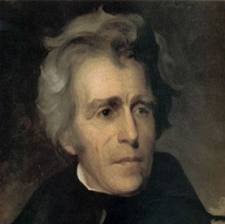
"Taught history" and U. S. Federal tribal laws concerning "race", often distorts and politicizes our modern views of history. All the "white" and "black" natives of various states, such as Mississippi, Texas, and Alabama, if not those from the Eastern seaboard states, know that there was a tremendous amount of intermarriage between Native Americans, blacks, and whites in the 16th, 17th, 18th, and 19th centuries, especially before the Civil War. Sam Houston had at least one Native American wife, perhaps more, after his first marriage to a white woman failed. Andrew Jackson raised a Native American child as his own. Although Oregon outlawed black immigrants at one time, the first U. S. settlers to next-door Washington State were a black man with his white wife, George Washington Bush and Isabella James Bush. Although it became illegal for whites and blacks to intermarry in most of the South, this prohibition never occurred with the Native Americans. During the War of 1812, General Andrew Jackson organized a very racially diverse group of fighters, including Native Americans, black slaves, free-"blacks", "pirates" such as Jean Lafitte, and "white" people, to successfully defend New Orleans from the British invaders in the Battle of New Orleans. These were just the tips of the icebergs, so to speak, and these examples are just a few cases of how "taught-history" has become distorted in U. S. culture. Research should show us that the USA has always been a mixed-race place, especially on the frontier if not everywhere else as well.
CONTENTS:
- Admission of error by myself regarding the U. S. Civil War: click here.
- Four Explorations of Possible Lies Commonly Promulgated about the War of 1812:
- Was there a conspiracy among many U. S. state militias, or a direct order from President Madison, to NOT invade Canada at the beginning of the War of 1812? Lies about the War of 1812-1:, More Lies about the War of 1812-2:
- Did the War of 1812 Expand the USA? Yes King George. But Merry Christmas King George.
- Longest Unguarded Border in the World.
- The list of America's first POW's, the 8000 names of Prison Ships Martyrs kept by the British during the Revolution. This list is directly from the online book found online on Oct. 8, 2022, AMERICAN PRISONERS OF THE REVOLUTION, linked to 3 paragraphs below.
The same list I linked to was originally at the United States Merchant Marine website.
The prisoners were housed on horrible prison ships anchored mostly in Wallabout Bay, Brooklyn, New York City USA during the revolution. This would be near the original site of the Brooklyn Naval Yard, where ships were built for the early U. S. Navy until quite recently. The Prison Ships Martyrs Monument is located in Fort Greene Park, Brooklyn, New York City. The actual number of prisoners kept on numerous prison ships is believed to have been more than 11,500, but most probably died before the survivors were freed. This list of 8000 names is all that there is, from the Revolution.
Online book just found on OCT. 8, 2022:
AMERICAN PRISONERS OF THE REVOLUTION, written in 1910 by
By Danske Dandridge
- ENGLISH HELL. Something you've probably never heard about, but will probably NEVER FORGET! It is an absolute fact that we are all former slaves in the USA.
- What was probably the main cause
of the U. S. Civil War? Slavery. Although the fear that Lincoln would abolish slavery was well known to be the main cause for South Carolina to secede, once the war broke out, the main publicly discussed issue soon became the general power struggle between Federal and state authorities.Once fighting began and civil discourse ended, Lincoln's emancipation proclamation, and any discussion of same, would have to wait until the North began to win the war.
If no actual war had broken out, Lincoln would absolutely have discussed the ending of slavery issue, as well as probably reparations for the Southern slave owners in return for granting emancipation for the former slaves.
The U. S. was the only country in the world to have a war break out about the issue of abolishing slavery. But the federal political structure enshrined state and federal powers both.
The word, "freedom" is exclaimed loudly in nearly all American cultural artifacts. In fact, the song Dixie does not mention slavery in any manner or form, as far as I know. "Dixie" was a very popular American tune until the song was stolen by ex-American confederates.
- Jefferson, Madison, Washington, etc. We can't understand Thomas Jefferson unless we understand women's rights throughout history.
- The European Age of Enlightenment.
- The Baratarians and the War of 1812: the extent to which Jean Lafitte and his group of Baratarian pirates helped Andrew Jackson defeat the British in the Battle of New Orleans beginning in Dec. 1814, may have been greatly understated in American history circles for about 200 years.
The fact is that the Lafitte group were presumed to be under attack by the American government for smuggling violations (customs duties violations) just days before the Battles of New Orleans, so they were not part of the New Orleans/Louisiana militia until probably hours before the first BONO, which occurred in Dec. 1814. Therefore, there is no record of their involvement since they were admitted into the militia due to their having numerous cannons and ammunition, though their ships had apparently just been seized by the U.S. government in a major raid.
War of 1812 pension claim investigations in the late 1800's: click here.
American historians never ignore Lafitte and his private navy, but the degree to which his forces were essential to an American victory, has been nearly forgotten until very recently. FACT: Lafitte's large group of Baratarian seamen and ships were the only large naval forces in the New Orleans area at the time just before the last battles in the War of 1812, other than the British Navy.
Without Lafitte's help, the U.S. would have probably lost in New Orleans. But the British and U. S. governments were both actively trying to destroy the Baratarian pirates in late 1814 until both sides tried to enlist Lafitte's forces as allies.
After being raided and "looted" by U.S. military forces on behalf of the U.S. Customs Department, the Lafitte brothers amazingly decided to fight for the Americans with his remaining assets, though he had probably just lost his ships, most of his loot, and his home located at Grand Terre, south of New Orleans on the Mississippi river.
- The Five U. S. Wars Fought Against Slavery: click here.
- The English led by King Harold Godwinson, the last Anglo-Saxon King of England, were defeated by the Norman invaders led by William the Conquerer in 1066 at the battle of Hastings. But the defeated group were not necessarily all Anglo Saxons, and the Normans also included people of Anglo-Saxon background, whatever that is.
- When about one fourth (some say one half) of the entire U.S. Army was massacred in one battle.
- Was Sam Houston trying to move his troops to Galveston from the San Jacinto area when he accidentally encountered Santa Anna's forces? At that moment, the provisional government of Texas was located in Galveston. All Houston needed to travel with his troops to Galveston was many boats. So many Texans at that very moment were trying to travel to either Galveston, New Orleans, or at least, to the Louisiana border.
- The Founding Fathers of the USA Began the Abolition of Slavery in 1789 with the 2nd and current Constitution of the U.S., which contains the following section enabling the abolition of the importation in or after 1808 of those already enslaved. (The Founders who wrote the current U.S. Constituiton were apparently ashamed to admit that anyone could be initially enslaved by an American.) This genesis of abolition of slavery did not contradict the right of any U. S. states to continue practicing slavery until abolition completely prevailed, which did not occur until 1865. Also, notice that there is no mention of Federal government involvement in the institution of slavey; in the U. S. Constitution of 1789, our current constitution, slavery is mentioned in relation to states where it's already being practiced prior to 1789. Slaves are usually referred to in those days as being in a "state of bondage", as if enslavement was a temporary condition that could be remedied. This also implies that our nation's Founders felt that slavery was a temporary, doomed, and nearly obsolete institution from nearly the beginning of the USA.
The word, "migration" in Article I, Section 9 refers to slaves brought to the USA when their owners immigrated here, such as the free blacks from Haiti who brought their own slaves with them.
(U. S. Constitution, Article I, Section 9) The Migration or Importation of such Persons as any of the States now existing shall think proper to admit, shall not be prohibited by the Congress prior to the Year one thousand eight hundred and eight, but a Tax or duty may be imposed on such Importation, not exceeding ten dollars for each Person.
- Has the USA Always Been Mixed Race?
- Which Confederate leaders were ever tried for Treason? Click here to see the list.
- The Very First President or Vice President to be Impeached in U. S. history: E-Book by Senator Edmund Gibson Ross, History of the Impeachment of Andrew Johnson.
This means that impeachment used to be very rare and unusual in U. S. history. The fact that Andrew Johnson was probably impeached for purely political reasons is clearly enunciated in the following story as told by former Senator Edmund G. Ross. Ross opines that the founding fathers did not intend for impeachment to be used for political purposes.
Click Here to read the book online.
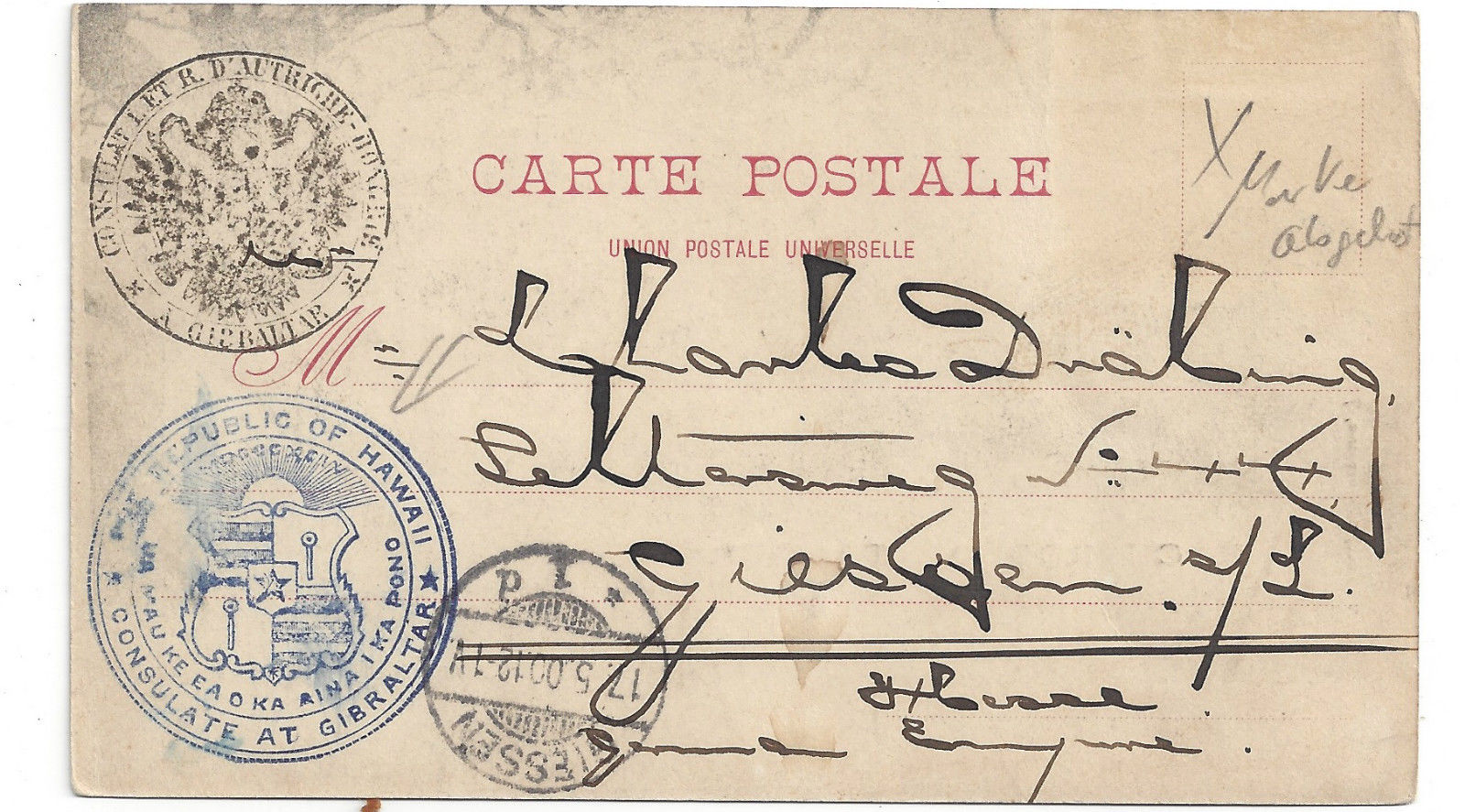
- The Republic of Hawaii really existed if this item is genuine: click here (link to Ebay item (photo-copy) for sale.)
- The most recent expansion of the USA was largely accomplished by the Democratic Party of Hawaii while ironically, Eisenhower (R) was President (1953-1960).
- Were All Sailors Really Slaves until about 1915? The reform of the traditions of maritime labor: the 1915 "Seaman's Act of 1915" as proposed by Wisconsin Senator Robert La Follette.
"Sailor" and "Slave" have nearly the same meaning, but also huge differences, until this act was passed. It appears that taking by force anyone from any particular seaside village or city, usually drunk or drugged men from pubs, onto a ship as a sailor was something that ship captains and agents had commonly done in America, Britain and the rest of the world for at least about 100 years (1800-1915), but probably earlier here and there, such as the taking of persons sold into slavery by the Vikings, etc., etc.
- The superstar "British Invasion" pop group that was actually from Chicago: click here.
- There would probably not be a USA in 2016 without the help of Spain. Spain supplied both sailors and loans. Spain was a major ally of the USA during the American Revolution. The French fleet which arrived just in time for the Battle of Yorktown was also carrying a massive horde of silver from Spanish Cuba which would be used to pay all of Washington's army. There is also a memorial in Spain to the Spanish victims of the British Prison Ships during the American Revolution.
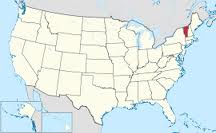
- Vermont, the 14th State Represents Freedom.
- Reagan was elected to expand the USA! But unfortunately, the USA SHRANK under his management. Will the USA ever expand again? Was Alaska (Eisenhower, 1959) the last LARGE additional State added to the United States?
- Expansion Plans of Founding Fathers Not Yet Realized.
Has the USA Always Been Mixed-Race?
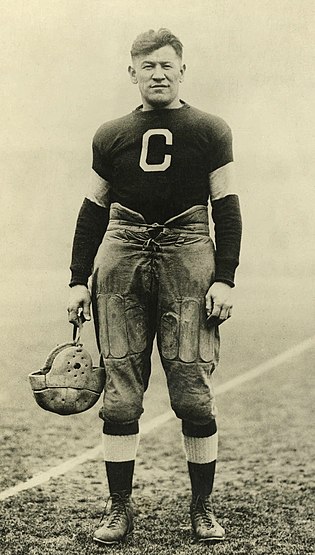
Mixed Race Native-American/White Americans, such as famous athelete Jim Thorpe, were once considered ubiquitious and normal in the USA.
Jim Thorpe
Founding President of What Later Became the NFL,
Claimed to be of French/Irish/Native-American ancestry.Historians are always distorting and generalizing the period 1815-1835 or so as if the War of 1812 never ended. But for around 20 years after the War of 1812 ended until the mid-1830's, whites, blacks (as slaves and free), and natives lived side by side in profound peace in most, if not all, of the frontier areas of the USA. During this period, white settlers moving west would travel into "Indian Territory" where "primitive" lodges and hotels were maintained by the Natives. There was much gambling going on during these years. (But these structures were no more primitive than those built and maintained by "whites".)
The evidence of there being peace in these frontier areas 1815-1836, especially in the Alabama and Mississippi Territories, is the fact that the state militias after statehood, and regular U.S. Army before statehood were never called up or activated during this period, nor were any wars or conflicts recorded as having occurred in history. Remember that the numbers of active duty state militia and U. S. Army were extremely tiny in times of peace during these years. We have to jump to 1836 in Alabama history before we find any major troubles recorded as having occurred with the natives after 1815. Sure, there were individual cases of cattle having been stolen by supposed natives, but this was also before estates were fenced. So cattle had to be branded to distinguish ownership.
Why not move to America from Europe and take a Native wife??? Tribal natives had largely been forced to take ownership of individual allottments or parcels of land in many of the "expansion territories" from the Louisiana Purchase and War of 1812 periods. The idea was that Natives should become Christians and learn to live as normal families, just like the white people from Europe. This was one period when "Native"/"White"/"Black" Intermarriage occurred in the USA on a large scale: click here to explore via google search.
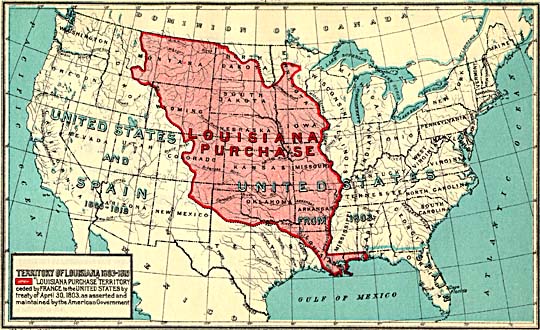
Here's another source of accurate information that claims that in the French (and Spanish and British) controlled areas of the USA, such as the entire area that was later called, "the Louisiana Purchase", just over 50 percent of all marriages were recorded (in churches) as being between Native Americans and white "French" colonists. Not all the inhabitants of this area were white "Frenchmen", even before the Louisiana Purchase.
Why is this era of intermarriage nearly totally forgotten or ignored today?
Is it possible that the supposed decline in Native American tribal populations during this period was caused largely by assimilation of many former tribal members into the passing as "white", and passing as "black", races?
Note that the sheer volume of European "white" settlers to the USA that occurred 1865-1920 or so, created the illusion that the USA was dominated by "white culture". But if we look back to the 400 year period before 1865 or so, we find tremendous evidence of race-mixing.
Note that according to honest historians, nearly all of Central and South America (and Mexico) are dominated today by "mestizo" peoples. "Mestizo" means mixed-race Native-American/European. Why should North America, the USA, and early Canada be considered any different? (In fact, Mexicans generally admit that they are mostly mixed race - mestizo.)
My opinion is that the extreme racist attitudes that became evident 1865-1945 didn't start occurring until after the Civil War, when white Europeans flooded into the USA, Mexico, and Canada, by the millions, and brought their racial attitudes from Europe with them, which loosely corresponded with the "white supremacy" and racial attitudes from the far-eastern sections of the deep south, and even into eastern (seabord) New England. But the anti-bellum slaver South was not extremist racist in the frontier areas! Think Arkansas, Texas, Louisiana outside the cities, Mississippi, Alabama, Western Carolinas, Virginia, Tennessee, and Kentucky.
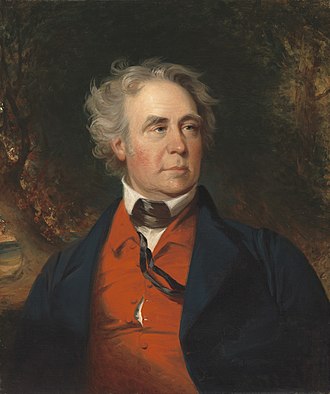
As a case in point, note that U. S. Vice President Richard M. Johnson from Kentucky was considered married to mixed-race wives sequentially when he was living part-time in Washington, D.C. as Senator, and later as V.P. He even brought his current "slave-wife" to D.C.
BEFORE THE CIVIL WAR, V. P. RICHARD M. JOHNSON
WAS MARRIED TO MIXED-RACE WIVES.In the presidential election of 1836, note that Virginia was the only U. S. state (our of 26 total) to withhold their electoral votes from Johnson becoming Vice President, resulting in this Vice Presidential election being handled by the U. S. Senate instead of the Electoral College. This manifestation of racism against Johnson was minimal, compared to the situation that began to develop after the Civil War.
About the time that Richard M. Johnson was sporting his mixed-race-slave-wife (or wives) in the District of Columbia, the Second War with the (remaining) Creek Indians Begins: Andrew Jackson's tribal Indian Removal Policy was manifested for a reason.
Note that no account online of the Second Creek War even mentions the actual start date! There is no evidence that I have found that a war was already in process when Roanoke, GA was burned down. But here is evidence of the actual date this war started:
Second Creek War begins on May 15, 1836: a band of tribal Creek Indians burned down the mostly empty town of Roanoke, Georgia, killing a small group of defenders who were taken by surprise. This town was never rebuilt, and the soon-to-be defeated remaining tribal Natives were later banished to "Indian Territory" (later to be called, "Oklahoma") after the Second Creek War was over. But plenty of Natives had already married into the "white and black races", so to speak, or visa-versa and probably blended into the white and black races in the SE USA.
The last wars with tribal Native Americans in the southeastern USA was occuring at about the same time that much of the midwest was joining the USA as new states. So there was also probably a lot of inter-marriage in territorial/frontier places like Missouri, Illinois, Iowa, Wisconsin, Minnesota, Arkansas, Michigan, Florida, Texas, and Kansas, just before the Civil War.
Did President Madison Actually Order
the U. S. Army to Invade Canada
at the Start of the War of 1812?OR DID HE ORDER THEM NOT TO INVADE?
War of 1812: brief discussion of the War of 1812 from the U.S. Library of Congress.
According to most (British influenced) American historians, The U.S. lost this war and the USA did not expand because of it! It's true, however, that the U.S. lost Canada for good in terms of expansion, and in terms of democracy, once we invaded.
Note that history records that in the early days of the War of 1812, two or three U. S. armies (nationalized state militias, or maybe even regular U. S. Army troops) sent to the Canadian border were COMMANDED not to invade on Constitutional grounds, since doing so might persuade Canadians from wanting to become citizens of the USA, voluntarily. The historical account predominating states that these U.S. Commanders who refused to invade Canada, were cowards and failures!!!!
Yet, seven brand new states suddenly became part of the USA beginning with Louisiana on April 30, 1812. Then less than two months later, the second war with the British (and Canada) started, ending in Jan. 1815 in New Orleans, Louisiana. Except for Louisiana's joining, this expansion wave of new states, all occurred after the British military actually left U.S. territory after losing the Battle of New Orleans. (War of 1812 states: Louisiana, Indiana, Mississippi, Illinois, Alabama, Maine, and Missouri.)
There had to be some connection to that war for the tremendous expansion, excepting Canada, that occurred during this period. In fact, the U.S. terriory originally called, "The Louisiana Purchase", which wasn't really owned fully by the USA until the War of 1812 was successfully fought, continued to become U.S. states until about 1907 when Oklahoma Territory, mostly cut from the Louisiana Purchase land, became U. S. state number 46.
But the (British influenced) historical liars state that "King" James Madison SCREWED UP, and was a SHRIMP (like Napoleon) of a PRESIDENT?
Everybody thinks it was General Andrew Jackson that "won" the War of 1812. Not so. The war was already over when he became victorious in New Orleans. General Jacob Brown is the forgotten hero of the War of 1812. I find it extremely odd and inappropriate that hardly anyone in the USA has ever heard of this guy! I also do not think that war is the primarly method by which democracies expand into new territory. Democracy is how democracies expand into new territory, ultimately. If war is how countries expand, then the USA would be much larger now than it was in 1890, but we're about the same size now as we were then, in terms of territory controlled, and we have had lots of wars since 1890. Same for the U.K., which has shrunk a lot since 1890, and fought a lot of wars.
The War of 1812:
One of the main problems in studying the War of 1812 is that the British burned down so many buildings in Washington, D.C., containing valuable historical records. So speculation rather than fact, flavors our "history" of this war. In this case, state militia records might reveal more of the truth, rather than anything that ever existed in Washington, D.C.
The fact that a fairly large number of certain U. S. state militias at the beginning of the war failed to invade Canada when "ordered" to do so is taken as fact, rather than an indication that these militias might never actually have been ordered to invade Canada, and maybe never ordered to actually shoot at Canadians; people who would hopefully soon be new American citizens! I would like to see the record of those direct orders that were not followed. Are there any such records?
The fact that these multiple U. S. state militias actually just sat there camping out at the Canadian border is still seen erroneously as proof of lack of U. S. courage, these days!!!!
I propose that these "acts" to not invade were part of the original Madison plan to persuade Canada to become part of the USA, very soon. Note that as soon as one Canadian or one American was killed, fighting was sure to start between the Canadians and the USA, and Canada would never be voluntarily annexing itself into a new part of the USA. Stopping at the border was the perfect way to convey a peace message to the future Americans on the other side.
Women's Rights:
Frankly, until the early 20th century with the ratification of the 19th Amendment to the U. S. Constituition for the USA, all women, not just black women, were pretty much treated as slaves.
FACT: in the USA, white women were generally not allowed to have bank credit cards in their own names until the 1970's! That means that my own mother was one of the first women in the USA to have a (cash replacement) credit card!!!! I had no idea until recently of these facts!
In the modern world, if we describe "women's rights" in the early USA, we would have to conclude that Sally Hemmings was not treated very badly by Thomas Jefferson compared to how all other women were being treated at the time. I am suspicious that the current "cancelation" of Thomas Jefferson is essentially an anti-American act, with no good coming from it.
The European Age of Enlightenment:
A better understanding of U.S. and western hemisphere history is gained by understanding the context in which the various American, South American, and French Revolutions occurred in the context of the so-called, European Age of Enlightenment.
This was the period when the educated middle and lower classes of Europe and their colonists in the Americas and elsewhere, basically took more control of their countries' governments, and to some extent, merged with the old landed-nobility and royalty, in terms of the rights and privileges being enjoyed.
To villify Thomas Jefferson is absolutely not a proper act in any context in my opinion. In response to what just occurred in New York State concerning the removal of the statue of Thomas Jefferson, Trump complained that this was an un-American act. I agree with him on that point.
Personally, I think the current growing awareness of unfairness in drug war practices 1900-2021 concerning race is much more horrible than what happened in the 15th, 16th, 17th, 18th, and 19th centuries with slavery and race. In fact, we can extend that time frame all the way back to the earliest of ancient history, and include enslaved white people as well, with little change until the 18th century, really.
QUESTION: WHERE DID ABOLITION OF SLAVERY BEGIN FIRST? Slavery first began to be abolished in Europe, mainly at the behest of the Catholic Church! I am not aware of any other "beginnings of abolitionism" occurring after the "fall of Rome" around the year 400 to 500 A.D. It can be argued that abolition was embraced in the Americas by the U.S. founding fathers of European descent during the European "Age of Enlightenment", and the current U.S. Constitution from 1787 is a part of that abolitionist movement to some extent. There is certainly no evidence whatsoever in the current U.S. Constitution of any plans from our founding fathers to promote the institution of slavery.
The U.S. founding fathers did enable the abolition of the importation of slaves beginning in 1808 in the current U.S. Constitution written and ratified 1787-1791.
Historically, people of all races on earth, not just blacks, are still extricating ourselves from slavery all over the world, in every country and culture in 2021! As I write this, a number of white people from the U.S. midwest were just captured and enslaved in Haiti by presumably black persons! Those black enslavers are seeking ransom money of 17 million dollars before they will release the 17 enslaved whites.
During World War II, American, British, Dutch, Jewish, French and other people, of varied races but mostly white people, from the Allied Nations and from elsewhere, were often captured and enslaved by the Japanese and Germans and others of the Axis powers. The Japs had already enslaved a lot of Koreans.
The Allies generally did not torture or exterminate any of the people captured or held as POW's from the Axis powers, though some ethnic Japanese people, U.S. citizens, living in the continental USA and Hawaii during WWII were forced to live in internment camps, and some POW's from Axis nations were allowed to work in the USA if they wanted, during the war. (Quite a few of those Axis nation POW's after being shipped to the USA, developed a strong affection for the USA during their period of mild-imprisonment as POW's in the USA during the war.)
I wish to point out that many Japanese-Amerians were very likely to join the U. S. Armed Forces, and were highly decorated during the war as exemplary.
The same cannot be said of those people from the Allied nations captured and held by the Axis nations during WWII. Ironically, Germanic peoples seem to generally be anti-slavery for much of recorded history, so what happened during WWII does not really fit into their culture.
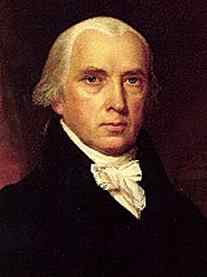
Benjamin Franklin, Francisco de Miranda, the Marquis de Lafayette, Simon Bolivar, Thomas Jefferson, and James Madison, were six of the revolutionary founders of the USA, Napoleonic France, and many South American countries which split from Spain, and who are seen today worldwide as major figures during this so-called "age of enlightenment".
The term "enlightenment" refers to a new phenomenon in the world: a large mass of fairly well educated and free persons who were not all born into, or otherwise associated with "nobility", and were not all super-wealthy. The lower and middle classes were becoming more and more prosperous and influential, if not eventually dominant, in the world.
Slavery and serfdom still existed everywhere in the world other than in Europe, but slavery and serfdom were steadily being abolished during this epoch of "enlightenment", perhaps slightly earlier in Europe than in the colonial areas such as in the Americas. But serfdom in Russia did not end until 1865, the same year that the USA finally abolished chattel slavery.
The Treaty of Ghent that Ended the War of 1812,
and the LONGEST UNGUARDED BORDER in the WORLD on Canadian/U.S. border,
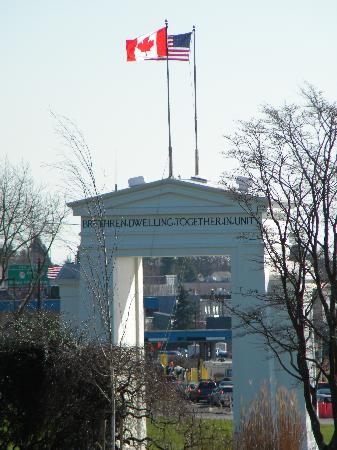
are both honored (honoured) by the Peace Arch in Blaine, Washington/Surrey, British Columbia.
The longest unguarded border in the world is also honored in North Dakota, here.......Vermont is said to have threatened to join Canada until the Revolutionary War ended in 1783, but Vermont remained an independent Republic until 1791.
Note that the U.S. Bill of Rights, the new U.S. Constitution, and the new Whiskey Tax, were all about to go fully into effect about the time that Vermont joined. Same year anyway. The Bill of Rights began when 14 U.S. States including Vermont ratified 10 amendments by Dec. 15, 1791. Many states were not going to ratify the constitution without the Bill of Rights.
U.S. NAVY TAUGHT THAT THE USA EXPANDED DUE TO WAR OF 1812!!!!
http://youtu.be/WQDDcn1w5z0
NOTE: U.S. Navy Film about the War of 1812 contradicts
most historical accounts of this war's outcome.Famous "Pet-Banker" to Andrew Jackson & Martin Van Buren.
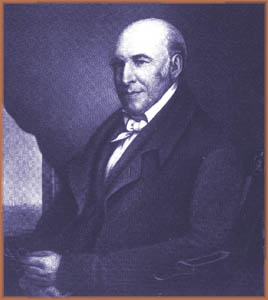
Stephen Girard (d. 1831)- War of 1812 "Financial Savior" of the USA.
STRANGE BUT TRUE: Two years after Girard died, the Bank of Girard became
one of Andrew Jackson's "pet banks"; its home office building
had once housed the original Bank of the United States!
After the war (of 1812), Girard became a large stockholder in and one of the
directors of the Second Bank of the United States. (When Andrew Jackson vetoed the
re-charter of the Bank of the United States), in September 1833, Secretary of the
Treasury Roger B. Taney transferred the government's Pennsylvania deposits in the Second
Bank of the United States to the Bank of Girard. Therefore, this made Girard
Bank a very significant example of so-called "PET BANKS" from the Jacksonian era.
Lies about the War of 1812.
Expansion Plans of the U.S. Not Yet Realized at Various Points Along the Way to 50 States.
- Founding Fathers who Wrote the Articles of Confederation: believe it or not, there is an eternal invitation in this original U.S. Constitution, which is largely grandfathered into the 1787 one, to Canadians to join the Revolt against Tyranny in the form of the King or Queen of England, and for Canada to become a free Republic, and new States of the United States.
Nothing personal - this is a replacement of that feudal social class system that historically often led to strife and feuds with relatives, civil war, etc., etc., etc. Democracy was designed to prevent war within our own governmental system, usually.
I think I read that Thomas Jefferson and James Madison believed that Canada was on the verge of joining the U.S. at various early moments in U.S. history, well after the new constitution of 1787. Should we have started shooting at future Americans? Probably not.
This indicates that the constitutionally mandatory invitation for Americans to persuade Canadians (Canada) to join the U.S. peacefully, must've still been in effect when Jefferson and Madison were president. (And note that our Secretary of War position, was still abolished as of July 4th 2012, as I write this (paragraph)! Peace prevails!)
"MAY THESE GATES NEVER BE CLOSED."Was this the first Peace Festival at the border with Canada? I'm glad that during the War of 1812, entire U.S. armies two or three times refused to invade Canada, supposedly contradicting direct orders. I'm also sorry that we eventually did invade, and burned down many important parts of the city of "York", later to become Toronto.
I know I didn't read that, but it makes sense that those incidents to not invade, were not accidents, and not due to cowardance, or ineptitude. It was the Jeffersonian/Madisonian attempt to get Canada to change sides at the beginning of the War of 1812. But it didn't work, yet.
In each case, I'm sure there were Canadian forces, small or large, camped nearby on the other side. Everyone on both sides of the invisible line smoking Indian tobacco and singing campfire songs, etc., etc., probably. If I'm right, at least two large U.S. armies never invaded Canada during the War of 1812, citing constitutional reasons in at least one, perhaps two, of those cases.
Changing methods for different state trophies? The idea that functioning Canadian states or provinces, but not Vermont(14), Kentucky(15), Tennessee(16), Ohio(17), and Louisiana(18) had to be taken by force with armies, rather than gained politically and peacefully ahead of time, is strange, odd, and out of place in our national expansionary methodologies. None of those states were taken by force leading up to the year 1812 when Lousisiana became the 18th state, so why screw up with Canada? But we did. Parts or all of Canada did not join the USA then, and do not seem, at the moment, to be on the verge of doing so. Military force does not necessarily lead to succussful expansion, and might sabatoge it here and there.
In the cases of U.S. expansion into Canada, any expansionary dreams were canceled by military force, eventually: democracy vs. war.
Democracy is usually the easier and more permanent way to expand, as compared to the military method. Jefferson and Madison should be faulted for not having cultivated a strong pro-American group in Canada leading up to the era of the War of 1812. In that imaginary scenario, Canada would've joined without the USA firing any shots, etc.; instead, a referendum to join, or not to join, the USA would've been held, democratically.
I think it's also fair to give some real leadership potentialities to any good ideas from any past leaders of our country. All of our leaders were democratically elected to a great extent, and these ideas from the past still have merit.
And why do so many "historians" ignore the truth based upon the evidence just presented above? The historical records mostly all got burned up (the history was burned) when the British burned down the White House and the Capital of the USA during this horrible war! That is a fact - and most records of the war were stored in the buildings which were burned down by the British!
I'm sure there were also records burned up which were owned by the British (Canadians) which were also burned down when the government buildings in York, Ontario, was torched by the U.S. soldiers who invaded. Sorry about that!
(The longest unguarded border in the world is called, "the Canadian/U.S. border", and is commemorated at The Peace Arch in Blaine, Washington/Surrey, B.C. The longest unguarded border in the world, is also commemorated in North Dakota.)
NOTE: any "constitutional overtures" for the USA and parts or all of Canada to join up in anyway beyond mere trade treaties, were probably canceled by the Treaty of Ghent. However, the current ultra-border between the countries did not exist until quite recent times; same with Mexico. Until about 1846, the Mexican Army had always been free to march right into downtown San Antonio. Until recent times, there was no border between Canada and the USA. Can we blame the Vietnam War and draft dodgers for the current ultra-border with Canada? In Europe, they see this whole sort of thing as going back toward the Nazi era, etc. You can even enter Europe through Turkey, Switzerland, Iceland, and many other countries that are not members of the E.U., and who don't use the Euro currency, either.
- President William McKinley's wars, etc. In addition to probably augmenting or encouraging the deactivation of the Republic of Hawaii, and then seizing the islands as mere real estate, McKinley was also a loser in terms of Cuba and the Phillipines, both quite large places that refused to even consider becoming new U.S. states.
Whatever the case; no matter the degree to which the USA remained loyal to our great and fearless leader, we must eventually face the facts as a nation: he was totally delusional mostly in terms of his own expansion plans, historically speaking, so far.
Or at least, it appears that poor Willy was, in fact, delusional.
McKinley stated that he waged the Spanish-American war for expansionist purposes! That was a tragic mistake in terms of his reputation.
No real expansion occurred during his terms in office, or even shortly after someone shot him. It's a miracle that Hawaii joined the U.S. nearly 60 years later. R.I.P. Mr. Bill!!! INSTANT KARMA!!!!
Thanks largely to the Democratic Party of Hawaii, Hawaii joined the USA in 1959. This would not have happened without that particular open-minded and freedom oriented political party in that particular unique American state (a pacific island), in the particular era when it occurred. It's good that the Republicans and others there and in the U.S. Congress, etc., allowed it to happen.
It is also cool that a Republican was President when Hawaii joined the USA totally in 1959.
- Teddy Roosevelt I suppose that Teddy Roosevelt was also one of the loser presidents in terms of true expansion, as the old Panama Canal Zone is associated with Roosevelt. Sorry Teddy - you are a temporary expansionist, which means, it didn't really happen.
We lost the Zone!
- President Ford and Reagan. They promised the people of the U.S.A. that The Canal Zone would be kept by the U.S. if we would only elect him (them) President. It didn't work. We lost the Zone. but He was elected (by Them).
President Carter may have lain the groundwork for possible future expansion by not being so pushy, and giving Panamanians choice in the matter.
- OTHER FAILED U.S. Expansion States and Expansion Dream Subjects of U.S. Presidents, or not:
- Mexico (suitors - Tyler/Polk - status - Republic of Texas joins USA unable to defend borders - war results - Mexico loses - loses/sells additional territory. NOTE: this is also about the rest of Mexico which is probably not on the verge of wishing to join the USA, unlike the former "Tejas" part of "Coahuila y Tejas" states, The "Tejas" state part of which then became "Mexican Texas" for a short time, then the Republic of Texas, then was successfully added as the "State of Texas" along with much unpopulated territory of the Western USA - status - SUCCESSFUL/Mexico sold additional territory with the Gadsden Purchase - otherwise FAILURE in terms of the rest of Mexico),
- Vietnam (suitors, or Presidents being sought - Wilson and Truman - suitor - Ho Chi Minh - status - FAILED - later Vietnam War occurs which further estranges the two nations other than S. Vietnamese refugees, many of whom became U.S. citizens after successfully GETTING HERE ALIVE - NOTE: no Vietnamese TERRITORY gained),
- The United Nations (suitor - President FDR. status: merger never took place - status - FAILED),